
 Philip Hall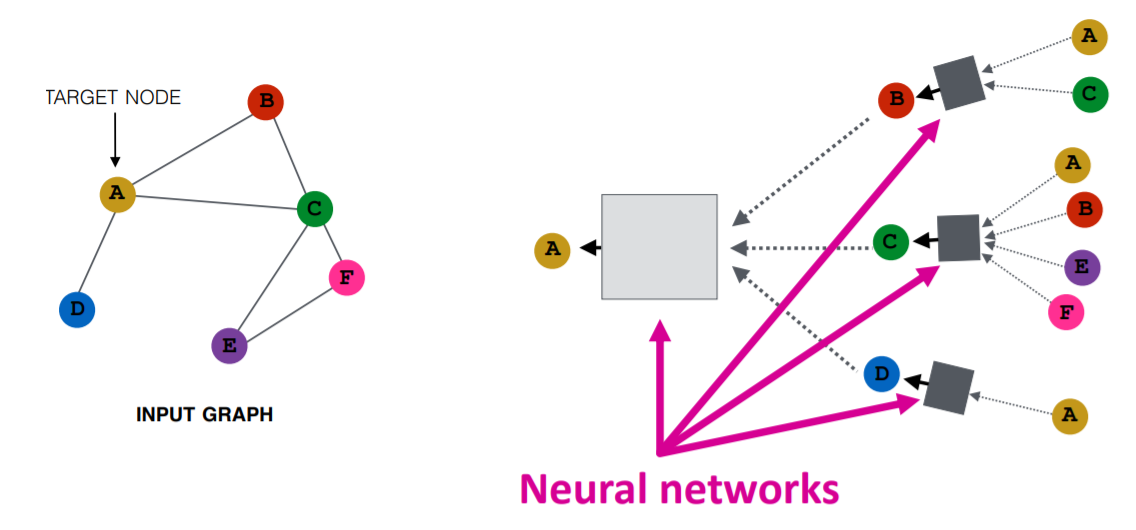
We live in a world interconnected by relationships. From social networks linking billions of people to intricate biological pathways within our cells, understanding these connections is key to unlocking valuable insights and making accurate predictions. Traditional machine learning models often struggle to effectively capture and learn from the complex structures inherent in relational data. However, a powerful new class of neural networks, known as Graph Neural Networks (GNNs), is emerging as the next wave in relationship modelling, offering unprecedented capabilities in analysing and leveraging interconnected data. For anyone considering a Data Science Course, understanding GNNs is becoming increasingly crucial as they tackle real-world problems involving complex relationships.
Beyond Independent Data Points: The Power of Graphs
Most conventional machine learning models treat data points as independent entities. While this approach works well for many tasks, it falls short when the relationships between data points are just as, or even more, important than the individual data points themselves. Think about predicting the spread of a virus – the connections between individuals are paramount. Or consider recommending a product on an e-commerce platform – understanding the relationships between users and products is essential.
Graphs, with their nodes (representing entities) and edges (representing relationships), provide a natural and intuitive way to represent such interconnected data. GNNs are specifically designed to operate on these graph structures, enabling them to learn patterns and make predictions based not only on the attributes of individual nodes but also on the intricate web of connections that link them. A solid foundation in graph theory, often touched upon in a comprehensive Data Science Course, provides a strong basis for understanding GNNs.
How Graph Neural Networks Work: Learning from Connections
At their core, GNNs work by iteratively propagating information across the graph. Each node aggregates information from its neighbours, transforming and combining it with its own features. This process is repeated over several layers, allowing nodes to gather information from increasingly distant parts of the graph. Through this message-passing mechanism, GNNs learn representations of nodes and the entire graph structure that capture the complex relationships within the data.
Different types of GNN architectures exist, each with its own way of aggregating and transforming information. Some popular architectures include Graph Convolutional Networks (GCNs), which use a spectral or spatial convolution operation on the graph, and Graph Attention Networks (GATs), which introduce an attention mechanism to weigh the importance of different neighbours during the aggregation process. The choice of architecture often depends on the specific characteristics of the graph data and the task at hand. For individuals pursuing a Data Science Course in Pune exposure to these different GNN architectures will provide them with a versatile toolkit for tackling diverse relationship modelling problems.
Real-World Applications: Where GNNs Shine
The ability of GNNs to model complex relationships has led to their successful application in a wide range of domains:
- Social Network Analysis: Predicting user behaviour, identifying influential nodes, and detecting communities in social media platforms.
- Recommender Systems: Suggesting relevant products, movies, or articles based on user-item interaction graphs and user-user similarity graphs.
- Drug Discovery: Identifying potential drug candidates by analysing molecular structures (where atoms are nodes and bonds are edges) and predicting their properties.
- Fraud Detection: Identifying fraudulent transactions by analysing financial networks and detecting anomalous patterns of connections.
- Natural Language Processing: Understanding relationships between words in a sentence or entities in a knowledge graph for tasks like text classification and question answering.
- Traffic Prediction: Forecasting traffic flow by modelling road networks as graphs and analysing the relationships between different segments.
- Knowledge Graphs: Reasoning over complex knowledge bases by leveraging the relationships between entities and concepts.
These diverse applications highlight the versatility and power of GNNs in addressing real-world problems where relationships play a crucial role.
Advantages of Using Graph Neural Networks
Compared to traditional machine learning models, GNNs offer several key advantages when dealing with relational data:
- Native Handling of Graph Structure: GNNs are specifically designed to process graph data, allowing them to directly leverage the information encoded in the nodes and edges.
- Relational Reasoning: By propagating information across the graph, GNNs can capture complex dependencies and learn to reason about relationships between entities.
- Inductive Learning: Many GNN architectures can generalise to unseen nodes and even entirely new graphs, making them powerful for dynamic and evolving systems.
- Node and Graph-Level Predictions: GNNs can be used for various prediction tasks, including predicting properties of individual nodes, classifying entire graphs, and predicting the existence or properties of edges.
These advantages make GNNs a powerful tool in the arsenal of any data scientist working with interconnected data.
Challenges and Future Directions
Despite their immense potential, GNNs also face certain challenges:
- Scalability: Training GNNs on very large graphs can be computationally expensive.
- Over-smoothing: In deep GNNs, node representations can become overly similar, hindering performance.
- Dynamic Graphs: Handling graphs that evolve over time presents unique challenges.
- Interpretability: Understanding why a GNN makes a particular prediction can be difficult.
Ongoing research is actively addressing these challenges, with advancements in areas like graph sampling techniques, novel GNN architectures, and methods for handling dynamic graphs and improving interpretability. The field of GNNs is rapidly evolving, promising even more powerful and versatile tools for relationship modelling in the future.
Integrating GNNs into the Data Science Workflow
For data scientists looking to leverage the power of GNNs, several excellent libraries and frameworks are available, including PyTorch Geometric (PyG) and Deep Graph Library (DGL). These libraries provide efficient implementations of various GNN architectures and tools for graph data processing and manipulation. Incorporating GNNs into a data science workflow typically involves:
- Graph Construction: Representing the relational data as a graph with nodes and edges.
- Feature Engineering: Defining relevant features for the nodes and potentially the edges.
- GNN Model Selection: Choosing an appropriate GNN architecture based on the task and data characteristics.
- Training: Training the GNN model on the graph data using a suitable loss function and optimisation algorithm.
- Evaluation: Assessing the performance of the trained GNN model on a held-out set.
- Deployment: Integrating the trained GNN model into a real-world application.
Understanding these steps is a valuable takeaway for anyone pursuing a Data Scientist Course in Pune that covers advanced machine learning techniques.
Conclusion: Unlocking Insights from Interconnected Data
Graph Neural Networks represent a significant jump-ahead in our capabilities to model and understand the complex relationships that underpin many real-world systems. By moving beyond the limitations of traditional machine learning on independent data points, GNNs offer a powerful framework for extracting valuable insights and making accurate predictions in domains ranging from social networks to drug discovery. As the field continues to mature and the challenges are addressed, GNNs are poised to become a complelling tool in the data scientist’s toolkit, unlocking new possibilities in relationship modelling and driving innovation across various industries.
Business Name: ExcelR – Data Science, Data Analyst Course Training
Address: 1st Floor, East Court Phoenix Market City, F-02, Clover Park, Viman Nagar, Pune, Maharashtra 411014
Phone Number: 096997 53213
Email Id: enquiry@excelr.com


 Charita Runyan


