Charita Runyan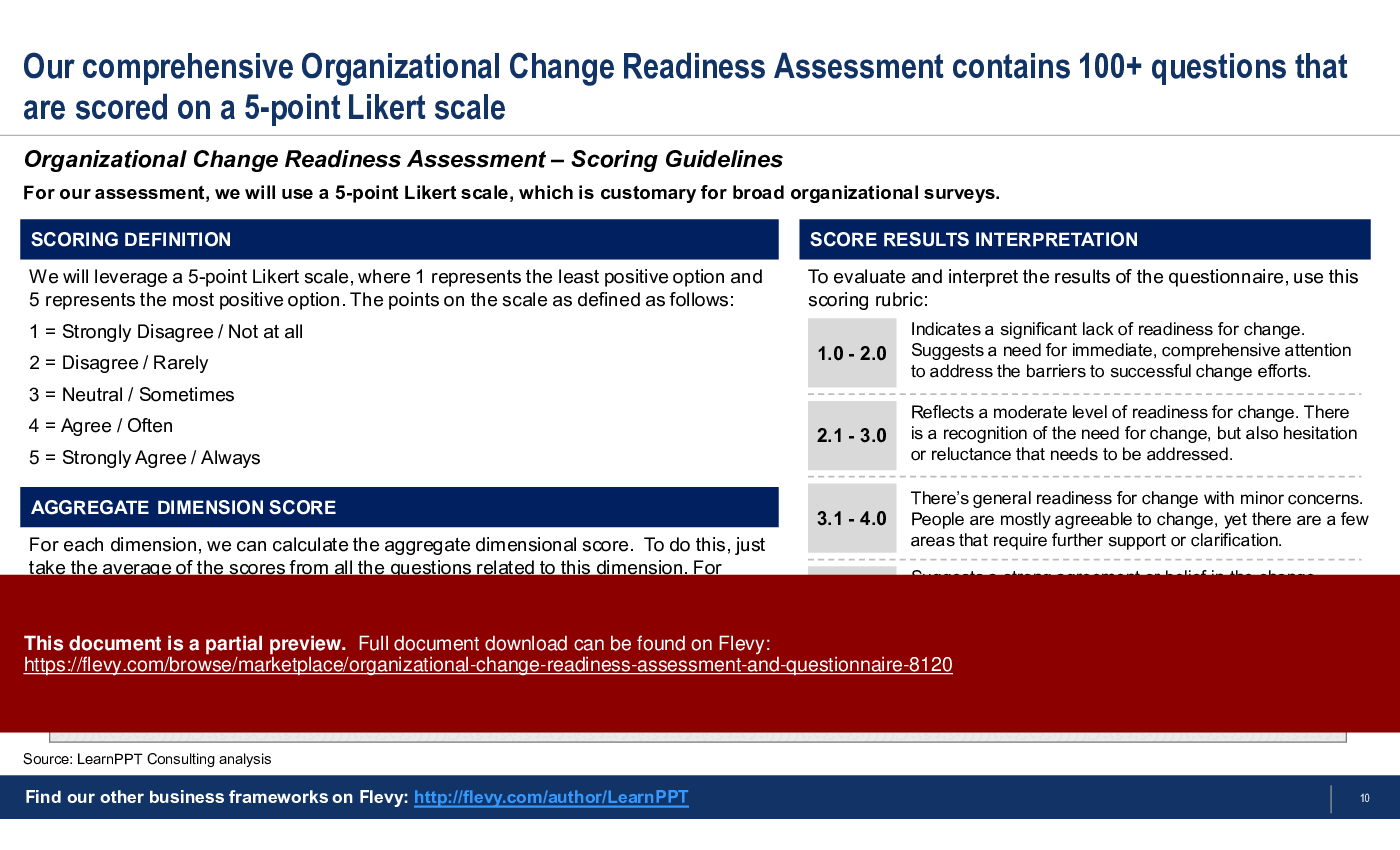
Imagine an organisation as a vast ship preparing for a long voyage across unfamiliar waters. Before setting sail, the captain must ensure the crew is trained, the vessel is sturdy, and the supplies are adequate. Without readiness, even the most advanced ship struggles against the tide. Organisational change readiness works in the same way. It measures whether the people, processes, and culture of a company are prepared to embrace a transformation. Many professionals who refine their change-management skills through structured learning, such as the business analyst classes in chennai, come to appreciate why readiness assessment is the compass guiding successful change journeys.
Understanding the Climate: Gauging the Emotional Temperature
Every transformation begins with understanding how people feel about the upcoming change. This phase resembles a meteorologist studying weather patterns before a voyage. Employees may be excited, cautious, confused, or resistant. Their emotional temperature influences how smoothly the change will be accepted.
Organisational readiness assessments use surveys, interviews, and focus groups to reveal hidden currents beneath the surface. Are employees aware of why change is needed? Do they trust leadership? Do they feel heard in the process? These insights guide leaders in shaping communication strategies and addressing concerns before they escalate into barriers.
Without this emotional mapping, change efforts risk sailing blind into storms of misunderstanding or resistance.
Assessing Capacity: Evaluating Skills, Systems, and Structures
Readiness is not only about willingness—it is also about capability. This stage mirrors a mechanic inspecting the ship’s engines, fuel systems, and equipment before departure. Organisations must evaluate whether teams possess the skills, tools, and resources needed to adopt the proposed transformation.
Do employees require upskilling? Are current systems compatible with the new solution? Are workflows flexible enough to accommodate change? Assessing capacity ensures that the organisation is not attempting to implement transformation with outdated tools or insufficient preparation.
This evaluation highlights gaps that can be addressed through training programs, resource allocation, or phased adoption strategies, ensuring the organisation moves forward with confidence.
Leadership Alignment: Ensuring the Crew Rows in the Same Direction
A ship’s journey falters when its leaders disagree about the route. Similarly, successful organisational change requires leadership unity. This phase assesses whether decision-makers share a common vision, understand their roles in the change process, and communicate consistently.
Leaders must model the behaviours they expect from employees. If they waver, resist, or send mixed signals, the entire transformation effort weakens. Clear governance structures, defined responsibilities, and shared accountability frameworks ensure the leadership team moves in harmony.
Professionals often deepen their understanding of leadership dynamics through structured development avenues such as the business analyst classes in chennai, where alignment and clarity are reinforced as essential components of change success.
Cultural Readiness: Understanding the Organisation’s DNA
Culture shapes behaviour more powerfully than any plan or procedure. Evaluating cultural readiness is like understanding the tides and currents that influence a ship’s movement. Some cultures embrace experimentation, while others prioritise stability. Some reward collaboration, while others favour hierarchy.
Assessing cultural readiness helps identify whether the proposed change aligns with existing values or challenges them. If a transformation requires more openness, faster decision-making, or cross-functional cooperation, leaders must prepare the organisation accordingly.
Ignoring cultural readiness can cause even well-designed solutions to fail, as cultural misalignment creates friction that undermines adoption.
Communication and Engagement: Building Trust and Transparency
Effective communication is the lighthouse that guides organisations through change. A readiness assessment evaluates whether communication channels are strong, transparent, and trusted by employees.
Do employees receive timely updates? Do they understand how the change affects them? Are feedback mechanisms available and encouraged? Engagement ensures that employees feel like participants in the journey rather than passengers being carried without input.
When communication is open and consistent, resistance softens, trust builds, and change becomes a shared endeavour.
Conclusion
An organisational change readiness assessment is not a checklist—it is a strategic exploration of the organisation’s emotional, cultural, structural, and leadership landscape. It reveals whether the company is truly prepared for the transformation it envisions.
When leaders understand their organisation’s readiness, they can design interventions that reduce resistance, empower employees, and support long-term success. With the right preparation, the organisational ship does not merely survive the journey—it charts a new and prosperous course toward its future.